この商品を友人に教える:
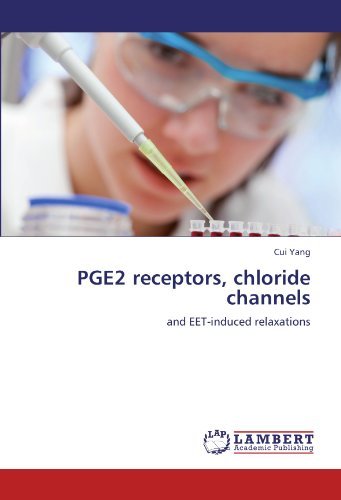
Pge2 Receptors, Chloride Channels: and Eet-induced Relaxations Cui Yang
遠隔倉庫からの取り寄せ
 クリスマスプレゼントは1月31日まで返品可能です



Pge2 Receptors, Chloride Channels: and Eet-induced Relaxations
Cui Yang
Endothelial cells play a central role in cardiovascular homeostasis by generation of numerous vasoconstrictors and vasodilators. One of the vasodilators is the endothelium-derived hyperpolarizing factor (EDHF). The identity of EDHF is not completely clear but a widely accepted candidate is epoxyeicosatrienoic acids (EETs). Firstly, we convincingly showed that the relaxing effect of 14,15-EET is mediated through the Gs protein-coupled EP2 receptors which were linked to the cAMP/PKA-dependent pathway. Secondly, we demonstrated that the effects of arterial size, aging and hypertension on the vasorelaxing response of EETs were due to the different expressions of EP2 receptor. Thirdly, whole-cell patch clamp study demonstrated that EETs inhibited volume-activate Cl- channels in rat mesenteric arterial smooth muscle cells through a cGMP and cAMP-dependent pathway. Finally, we showed the inhibition of Cl- channels potentiated the EDHF-mediated relaxation in rat mesenteric arteries. The mechanism probably involved the enhanced opening of Kir channels. It is hoped that the findings in this study can provide a better understanding of the physiology and pathophysiology of vascular system.
| メディア | 書籍 Paperback Book (ソフトカバーで背表紙を接着した本) |
| リリース済み | 2011年7月2日 |
| ISBN13 | 9783844384048 |
| 出版社 | LAP LAMBERT Academic Publishing |
| ページ数 | 196 |
| 寸法 | 150 × 11 × 226 mm · 310 g |
| 言語 | ドイツ語 |