この商品を友人に教える:
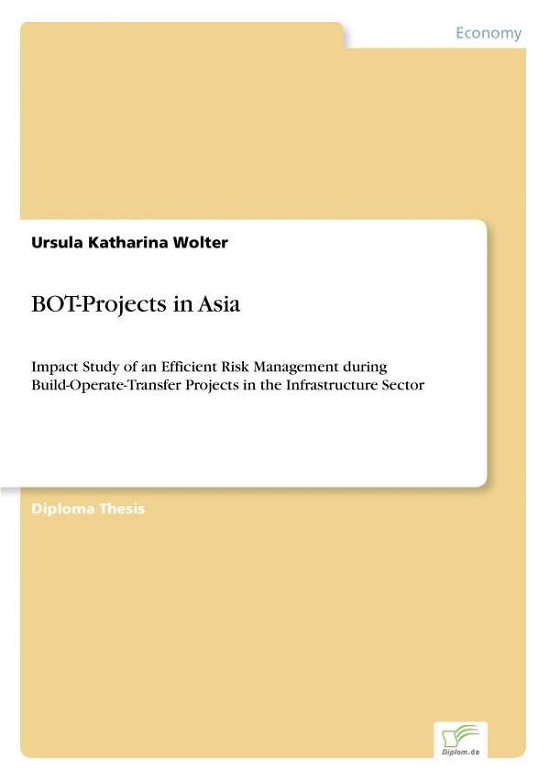
BOT-Projects in Asia: Impact Study of an Efficient Risk Management during Build-Operate-Transfer Projects in the Infrastructure Sector Ursula Katharina Wolter
遠隔倉庫からの取り寄せ
 クリスマスプレゼントは1月31日まで返品可能です



BOT-Projects in Asia: Impact Study of an Efficient Risk Management during Build-Operate-Transfer Projects in the Infrastructure Sector
Ursula Katharina Wolter
Diploma Thesis from the year 2006 in the subject Business economics - Supply, Production, Logistics, grade: 1,5, Nürtingen University (Wirtschaftsrecht), language: English, abstract: Inhaltsangabe: Abstract: The rapidly developing economies in Asia are undergoing unprecedented growth. This explosive development has placed incomparable demands on the existing infrastructure in many countries. Governments struggle with the challenge of providing modern, efficient, and affordable infrastructure services for their people; finding it difficult to finance what are often multimillion dollar projects on their own. Involving the private sector in the financing and operation of infrastructure promises several benefits for both parties. With a share of over eleven percent in German foreign trade, exports to Asia are ? in terms of volume ? now two percent higher than those to the USA. Many German companies have taken on public private partnerships as a form of cooperation and thus play a part in the sustainable development of the Asian economies. To date the most common sub-type of private participation in infrastructure is the BOT (Build-Operate-Transfer) model, where a project company finances and constructs new infrastructure and operates that infrastructure over a long-term period, before it is transferred back to the government. But despite the long history of projects of this type, only a few are very successful and usually mean more costs than income to the companies. Eurotrain, a joint venture between rail giants Alstom and Siemens, proved in May 1998 it was ready to build Taiwan?s US$ 14 billion high-speed rail (BOT) project, with a successful test-run of its integrated train system in Germany. The only problem was that after at least a two-year effort, the Taiwan High Speed Rail Corporation (THSRC) suddenly decided to give the core contracts to the Japanese Shinkansen Consortium. THSRC has yet to explain why Eurotrain was not given a chance to match Shinkansen?s offer.
112 pages
| メディア | 書籍 Paperback Book (ソフトカバーで背表紙を接着した本) |
| リリース済み | 2006年8月3日 |
| ISBN13 | 9783832497385 |
| 出版社 | Diplom.de |
| ページ数 | 112 |
| 寸法 | 148 × 210 × 7 mm · 154 g |
| 言語 | 英語 |

