この商品を友人に教える:
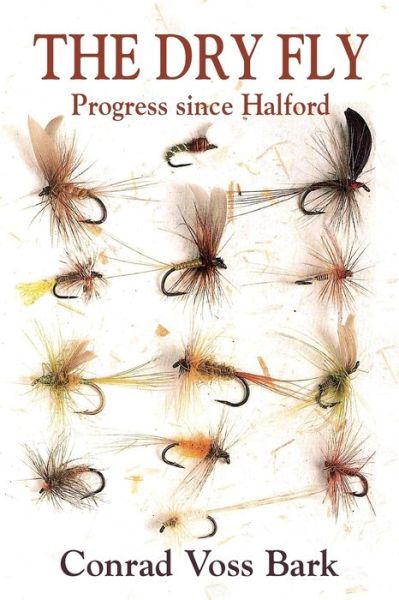
The Dry Fly: Progress since Halford Conrad Voss Bark
遠隔倉庫からの取り寄せ


The Dry Fly: Progress since Halford
Conrad Voss Bark
The dry fly has long presented a design challenge to the angler. In the early 1900s, the best fishing minds, most prominently Halford, applied themselves to creating perfect replicas of the natural insect which would sit high on the water surface.
Then came Colonel Harding and his watertank. This lead to the theory that trout do not see flies as we do: therefore dry flies should be tied to create the right impression, as seen from a trout's underwater perspective.
At different times in history, the arguments have raged: colour and shape have gone in and out of fashion, the importance of outlines and silhouettes have waxed and waned. new ideas have embraced attempts to hide the hook, to turn the fly upside-down, to make it always land the right way up, to suggest 'ghost wings', to make it unsinkable, and so on.
Men like Halford, Harding, Skues, Lunn, Marinaro, Wulff - and more recently Goddard, Clarke, Patterson, Jorgensen - these men and many others have introduced significant changes to the way we tie flies and to our understanding of how trout perceive them.
They have been responsible for such flies as the Adams, the Funneldun, the Bi-Visible and the Upside-Down fly, which have had a lasting influence on the sport.
In this book, Conrad Voss Bark reveals the turbulent development of the dry fly throughout the twentieth century. In his usual lively and incisive style, he brings an important aspect of angling history to life.
128 pages, 79 Illustrations, black and white; 8 Halftones, black and white; 4 Halftones, color; 79 I
| メディア | 書籍 Paperback Book (ソフトカバーで背表紙を接着した本) |
| リリース済み | 2021年2月1日 |
| ISBN13 | 9781913159320 |
| 出版社 | Merlin Unwin Books |
| ページ数 | 128 |
| 寸法 | 234 × 155 × 15 mm · 254 g |
| 言語 | 英語 |
![Cover for Conrad Voss Bark · A History of Flyfishing (Paperback Book) [New Ed edition] (2021)](https://imusic.b-cdn.net/images/item/original/161/9781873674161.jpg?conrad-voss-bark-2021-a-history-of-flyfishing-paperback-book&class=scaled&v=1626500969)


![Cover for Steve Palin · A Murmuration of Starlings: The Collective Nouns of Animals & Birds (Hardcover Book) [New edition] (2025)](https://imusic.b-cdn.net/images/item/original/546/9781906122546.jpg?steve-palin-2025-a-murmuration-of-starlings-the-collective-nouns-of-animals-birds-hardcover-book&class=scaled&v=1393824964)











![Cover for Alexander Schwab · Mushrooming without Fear (Hardcover Book) [New edition] (2022)](https://imusic.b-cdn.net/images/item/original/504/9781913159504.jpg?alexander-schwab-2022-mushrooming-without-fear-hardcover-book&class=scaled&v=1654224334)