この商品を友人に教える:
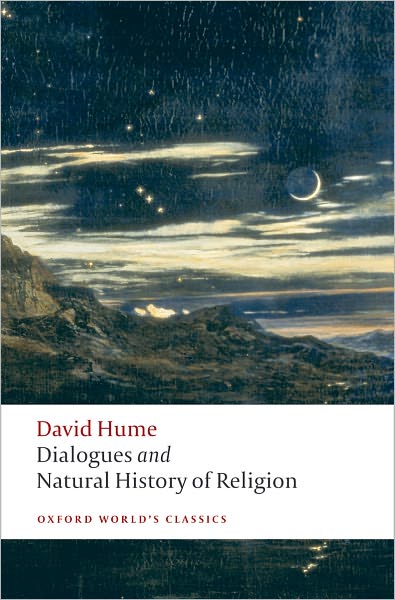
Dialogues Concerning Natural Religion David Hume
遠隔倉庫からの取り寄せ


他の形態でも入手可能:
- Paperback Book (1990) ¥ 2.006
- Paperback Book (2015) ¥ 2.198
- Paperback Book (2015) ¥ 2.468
- Paperback Book (2017) ¥ 2.468
- Paperback Book (2019) ¥ 2.468
- Paperback Book (2009) ¥ 2.546
-
Paperback Book第2 版(1998) ¥ 2.565
- Paperback Book (2018) ¥ 2.603
- Paperback Book (2016) ¥ 2.642
- Paperback Book (2013) ¥ 2.738
- Paperback Book (1989) ¥ 2.777
- Paperback Book (2010) ¥ 2.873
- Paperback Book (2008) ¥ 2.893
- Paperback Book (2020) ¥ 2.970
- Paperback Book (2017) ¥ 2.989
- Paperback Book (2016) ¥ 3.008
- Paperback Book (2012) ¥ 3.143
- Paperback Book (1901) ¥ 3.259
- Paperback Book (2014) ¥ 3.278
- Paperback Book (2019) ¥ 3.278
- Paperback Book (2007) ¥ 3.413
- Paperback Book (2023) ¥ 3.548
- Paperback Book (2021) ¥ 3.703
- Paperback Book (2011) ¥ 3.722
- Paperback Book (2016) ¥ 3.780
Dialogues Concerning Natural Religion
David Hume
Publisher Marketing: In Dialogues Concerning Natural Religion Hume explores whether religious belief can be rational. Because Hume is an empiricist (i.e. someone who thinks that all knowledge comes through experience), he thinks that a belief is rational only if it is sufficiently supported by experiential evidence. So the question is really, is there enough evidence in the world to allow us to infer an infinitely good, wise, powerful, perfect God? Hume does not ask whether we can rationally prove that God exists, but rather whether we can rationally come to any conclusions about God's nature. He asserts that the first question is beyond doubt; the latter is initially undecided. Hume presents three characters, each of whom represent a different position on this issue, engaged in a dialogue together. Demea argues for the position of religious Orthodoxy, and insists that we cannot possibly come to know the nature of God through reason. Philo, the philosophical skeptic, agrees with Demea that God is incomprehensible and provides the most convincing arguments for this position. Cleanthes argues the position of empirical theism-the position that we can come to know about God by reasoning from the evidence afforded us by nature-against these two opponents. Together with his characters, Hume forces the reader to reflect not on the existence of God, but on the nature of religion and faith. Contributor Bio: Hume, David David Hume (1711-1776), along with Adam Smith and Thomas Reid, was one of the most important figures of the Scottish Enlightenment. His writings, which encompass philosophy, economics, and history, include "A Treatise of Human Nature; Essays, Moral and Political; and An Enquiry Concerning Human Understanding."
| メディア | 書籍 Paperback Book (ソフトカバーで背表紙を接着した本) |
| リリース済み | 2012年11月15日 |
| ISBN13 | 9781480283534 |
| 出版社 | Createspace |
| ページ数 | 146 |
| 寸法 | 133 × 203 × 8 mm · 158 g |



![Cover for David Hume · My Own Life - Luminary Collection (Paperback Book) [Bilingual edition] (2024)](https://imusic.b-cdn.net/images/item/original/004/9781916658004.jpg?david-hume-2024-my-own-life-luminary-collection-paperback-book&class=scaled&v=1763528421)



![Cover for David Hume · Histoire D'angleterre. T. 2 (Ed.1839-1840) (French Edition) (Paperback Book) [French edition] (2022)](https://imusic.b-cdn.net/images/item/original/184/9782012666184.jpg?david-hume-2022-histoire-d-angleterre-t-2-ed-1839-1840-french-edition-paperback-book&class=scaled&v=1410165997)
![Cover for David Hume · Discours Politiques De Monsieur Hume Traduits De L'anglois. T. 1 (Ed.1754) (French Edition) (Paperback Book) [French edition] (2022)](https://imusic.b-cdn.net/images/item/original/236/9782012657236.jpg?david-hume-2022-discours-politiques-de-monsieur-hume-traduits-de-l-anglois-t-1-ed-1754-french-edition-paperback-book&class=scaled&v=1409891436)














![Cover for David Hume · Dialogues Concerning Natural Religion (Royal Collector's Edition) (Case Laminate Hardcover with Jacket) (Hardcover Book) [Royal Collector's edition] (2021)](https://imusic.b-cdn.net/images/item/original/326/9781774765326.jpg?david-hume-2021-dialogues-concerning-natural-religion-royal-collector-s-edition-case-laminate-hardcover-with-jacket-hardcover-book&class=scaled&v=1638336246)