この商品を友人に教える:
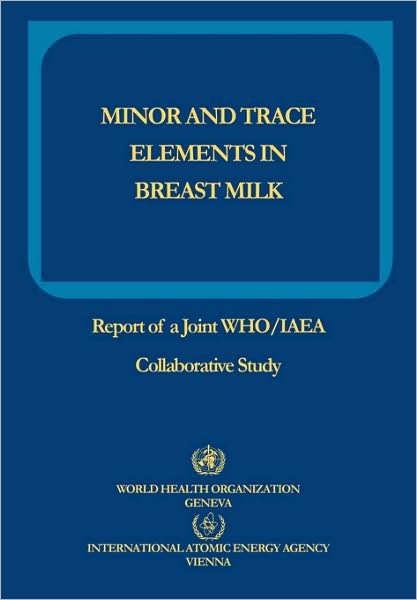
Minor and Trace Elements in Breast Milk: Report of a Joint Who / Iaea Collaborative Study
遠隔倉庫からの取り寄せ
 クリスマスプレゼントは1月31日まで返品可能です



Minor and Trace Elements in Breast Milk: Report of a Joint Who / Iaea Collaborative Study
Iaea
The third and final volume in a series of reports stemming from a multi-national study on breast-feeding (see also Contemporary Patterns of Breast-feeding and The Quantity and Quality of Breast Milk). Responding to inconsistencies in the published data on concentrations of trace elements in breast milk, the study analyzes milk samples collected from women in Guatemala, Hungary, Nigeria, the Philippines, Sweden and Zaire in an effort to obtain reliable data on the quantities of minor and trace elements present in breast milk. The study was also designed to determine whether the concentrations of these elements varied significantly with the socioeconomic group, geographical origin, or nutritional status of the mothers. The book opens with a brief explanation of the biochemical functions of trace elements and the association of deficiencies with various disorders of growth and development. The second chapter explains the careful design of the study, which used standardized procedures for the collection of samples, a single reference analytical laboratory for each element, and appropriate analytical reference materials. Results are then presented for total dry matter and for antimony, arsenic, cadmium, calcium, chlorine, chromium, cobalt, copper, fluorine, iodine, iron, lead, magnesium, manganese, mercury, molybdenum, nickel, phosphorus, potassium, selenium, sodium, tin, vanadium, and zinc. For each element, information is given on any observed differences between study areas, variations in samples between urban and rural areas, and variations in concentrations according to time of year. A discussion of findings compares results of the study with data from the literature, assesses sources of variation in the elemental composition of human milk, and compares the observed daily intake of minor and trace elements with recommended intake. The book concludes that when minor and trace elements are determined under similar conditions in the breast milk of groups of mothers living in different parts of the world, environmental conditions play a major role in determining concentrations. Findings from the study should also prove useful in the formulation of recommendations regarding levels of trace elements in the diet of infants.
| メディア | 書籍 Paperback Book (ソフトカバーで背表紙を接着した本) |
| リリース済み | 1989 |
| ISBN13 | 9789241561211 |
| 出版社 | World Health Organisation |
| ページ数 | 176 |
| 寸法 | 167 × 10 × 240 mm · 290 g |
| 言語 | 英語 |
| 寄稿者 | WHO |