この商品を友人に教える:
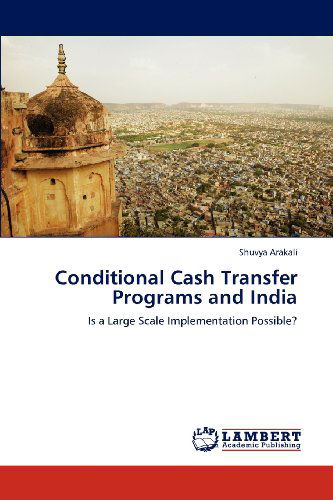
Conditional Cash Transfer Programs and India: is a Large Scale Implementation Possible? Shuvya Arakali
遠隔倉庫からの取り寄せ


Conditional Cash Transfer Programs and India: is a Large Scale Implementation Possible?
Shuvya Arakali
A Conditional Cash Transfer Program (CCT) is a type of social safety net program that originated in Latin America during the early 1990?s. It is unique in that it targets the two major drivers of structural poverty: education and health. CCTs involve a cash transfer to beneficiaries only if they routinely send their children to school and health clinics. The rationale behind this concept is that investing in human capital will not only relieve the short-term symptoms of poverty, but also stop the cycle of inter-generational poverty. The programs? successes in Latin America can be broken down into a list of criteria. These criteria are necessary for any CCT and anti-poverty program to be successful. The criteria are then applied to the anti-poverty programs in India to see if a large-scale implementation of CCTs would work in India. The bottom line surrounding the analysis of India?s anti-poverty programs using the CCT criteria is that a complicated bureaucracy, corruption, and lack of transparency drives the majority of the inefficiencies seen in India. If corrected for, CCTs can target the major contributors to poverty in India: poor health, lack of education, and social biases.
| メディア | 書籍 Paperback Book (ソフトカバーで背表紙を接着した本) |
| リリース済み | 2012年7月20日 |
| ISBN13 | 9783659182709 |
| 出版社 | LAP LAMBERT Academic Publishing |
| ページ数 | 56 |
| 寸法 | 150 × 3 × 226 mm · 102 g |
| 言語 | ドイツ語 |