この商品を友人に教える:
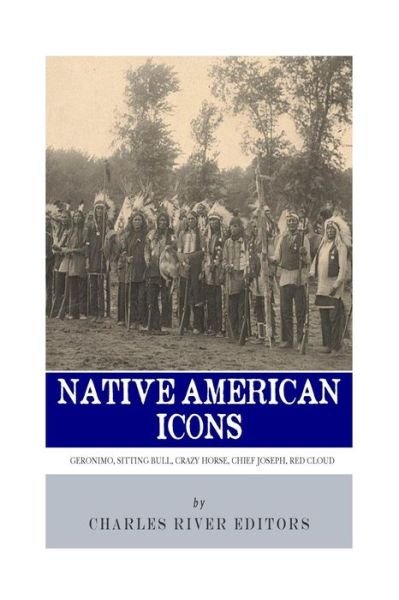
Native American Icons Charles River Editors
遠隔倉庫からの取り寄せ


Native American Icons
Charles River Editors
*Includes pictures of important people, places, and events.
*Explains several Lakota Sioux oral legends, as well as the origins of the names of each Native American icon.
*Explains the Battle of the Little Bighorn, the Nez Perce War, and Geronimo's final campaign
Five of the best known Native American legends in history are Geronimo, Sitting Bull, Crazy Horse, Chief Joseph and Red Cloud, celebrated by Americans today for the very reason they were reviled by Americans of their own day. Americans have always appreciated plucky, persistent, and dogged individuals, and there are few examples in the nation's history that represent the fighting spirit better than these Native American leaders.
The name "Geronimo" evokes a number of different emotions. Those who believed in 19th century America's "Manifest Destiny" viewed Geronimo and all Native Americans as impediments to God's will for the nation. Even today, many Americans associate the name Geronimo with a war cry, and the name Geronimo itself only came about because of a battle he fought against the Mexicans. Over time, however, those who empathized with the fate of the Native Americans saw Geronimo as one of a number of Native American leaders who resisted the U. S. and Mexican governments as their lands were being appropriated, often eluding large numbers of soldiers pursuing them.
Around the same time, Sitting Bull and Crazy Horse became legends at the Battle of the Little Bighorn, during which an estimated 2,000 Sioux and Cheyenne warriors inspired by one of Sitting Bull's visions routed and then annihilated the 7th U. S. Cavalry led by George Custer. That disaster led the American government to double down on its efforts to "pacify" the Sioux, and by the end of the decade many of them had surrendered and been moved onto a reservation. Sitting Bull and Crazy Horse were two of the last Sioux leaders to surrender, and both suffered controversial deaths on reservations.
Though he has not been remembered as vividly as another member of the Oglala Lakota, Crazy Horse, Red Cloud led the group for 40 years, in war, in peace, and on a reservation, becoming so esteemed and influential that Americans began to mistakenly take him for the leader of the entire Sioux tribe.
When he died in 1904, most Americans who knew his people's story considered Chief Joseph, whose Nez Percé name is Himahtooyahlatkekt ("Thunder Rolling Down from the Mountains"), a military genius and an "Indian Napoleon." This assessment of the Native American leader was based on a 1,500-mile odyssey during which he and his people left their reservation in the hopes of escaping to Canada, where the Nez Percé intended to join Sitting Bull and his Hunkpapa Sioux band. The real Chief Joseph was a gifted speaker and more diplomat than war leader. It's not surprising that Chief Joseph was misunderstood and misrepresented by Americans because his people's name was as well; Nez Percé literally means "pierced nose" in French, but it is unclear whether the tribe ever used nose piercing as a form of ornament.
Native American Icons profiles the amazing lives of the 5 Native American leaders, from their origins to their legendary confrontations with the U. S. Army, while also analyzing their lasting legacies. Along with pictures of the Native American icons and other important people, places, and events in their lives, you will learn about Geronimo, Sitting Bull, Crazy Horse, Chief Joseph and Red Cloud like you never have before.
| メディア | 書籍 Paperback Book (ソフトカバーで背表紙を接着した本) |
| リリース済み | 2018年1月11日 |
| ISBN13 | 9781983755484 |
| 出版社 | Createspace Independent Publishing Platf |
| ページ数 | 264 |
| 寸法 | 216 × 279 × 14 mm · 616 g |
| 言語 | 英語 |