この商品を友人に教える:
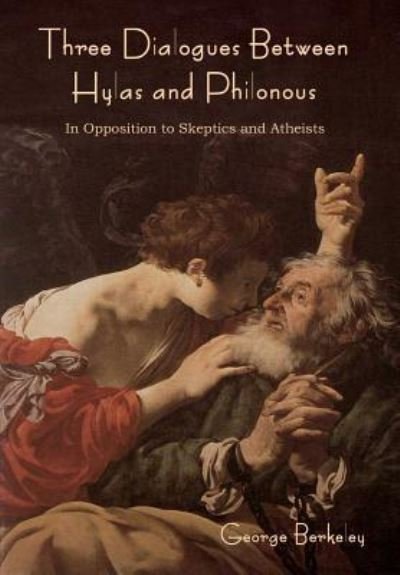
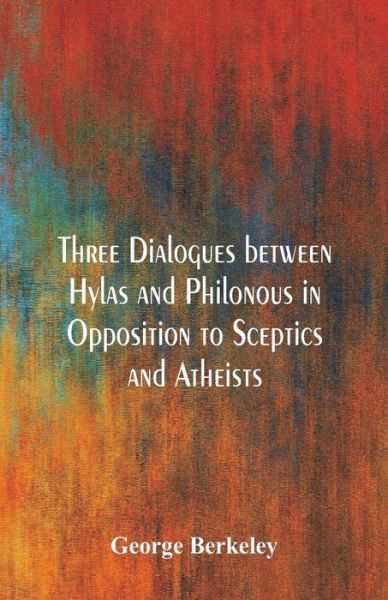
Three Dialogues between Hylas and Philonous George Berkeley
遠隔倉庫からの取り寄せ


他の形態でも入手可能:
- Paperback Book (2011) ¥ 1.993
- Paperback Book (1979) ¥ 2.543
- Paperback Book (2016) ¥ 2.619
- Book (1988) ¥ 2.903
- Paperback Book (2008) ¥ 3.131
- Paperback Book (2020) ¥ 3.435
- Paperback Book (2014) ¥ 3.454
- Paperback Book (2010) ¥ 3.454
- Paperback Book (2011) ¥ 3.605
-
Paperback BookAnnotated edition(2012) ¥ 3.795
- Paperback Book (2009) ¥ 3.852
- Hardcover Book (2018) ¥ 4.232
- Hardcover Book (2008) ¥ 5.029
- Paperback Book (2014) ¥ 5.162
- Hardcover Book (2020) ¥ 5.313
Three Dialogues between Hylas and Philonous
George Berkeley
George Berkeley (12 March 1685 - 14 January 1753) - known as Bishop Berkeley (Bishop of Cloyne) - was an Irish philosopher whose primary achievement was the advancement of a theory he called "immaterialism" (later referred to as "subjective idealism" by others). This theory denies the existence of material substance and instead contends that familiar objects like tables and chairs are only ideas in the minds of perceivers and, as a result, cannot exist without being perceived. Berkeley is also known for his critique of abstraction, an important premise in his argument for immaterialism.
Berkeley was the namesake of the city of Berkeley, California, which is most famous as the home of the University of California, Berkeley. Berkeley College, one of Yale University's 14 residential colleges, is named after George Berkeley.
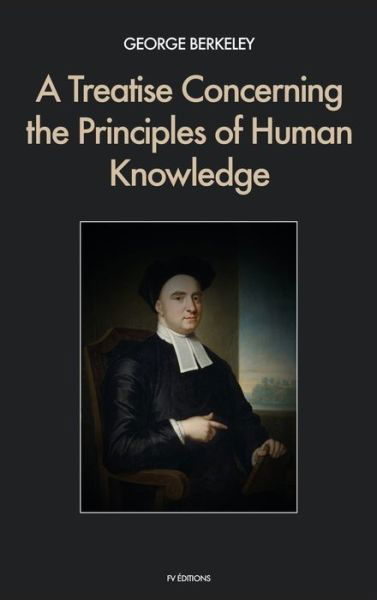
In 1709, Berkeley published his first major work, An Essay towards a New Theory of Vision, in which he discussed the limitations of human vision and advanced the theory that the proper objects of sight are not material objects, but light and colour. This foreshadowed his chief philosophical work, A Treatise Concerning the Principles of Human Knowledge, in 1710, which, after its poor reception, he rewrote in dialogue form and published under the title Three Dialogues between Hylas and Philonous in 1713.
In this book, Berkeley's views were represented by Philonous (Greek: "lover of mind"), while Hylas (Greek: "matter") embodies the Irish thinker's opponents, in particular John Locke. Berkeley argued against Isaac Newton's doctrine of absolute space, time and motion in De Motu (On Motion), published 1721. His arguments were a precursor to the views of Mach and Einstein. In 1732, he published Alciphron, a Christian apologetic against the free-thinkers, and in 1734, he published The Analyst, a critique of the foundations of calculus, which was influential in the development of mathematics.
His last major philosophical work, Siris (1744), begins by advocating the medicinal use of tar water and then continues to discuss a wide range of topics, including science, philosophy, and theology. Interest in Berkeley's work increased after World War II because he tackled many of the issues of paramount interest to philosophy in the 20th century, such as the problems of perception, the difference between primary and secondary qualities, and the importance of language. (wikipedia.org)
| メディア | 書籍 Hardcover Book (ハードカバー付きの本) |
| リリース済み | 2019年6月13日 |
| ISBN13 | 9781618955364 |
| 出版社 | Bibliotech Press |
| ページ数 | 120 |
| 寸法 | 152 × 229 × 11 mm · 335 g |
| 言語 | 英語 |
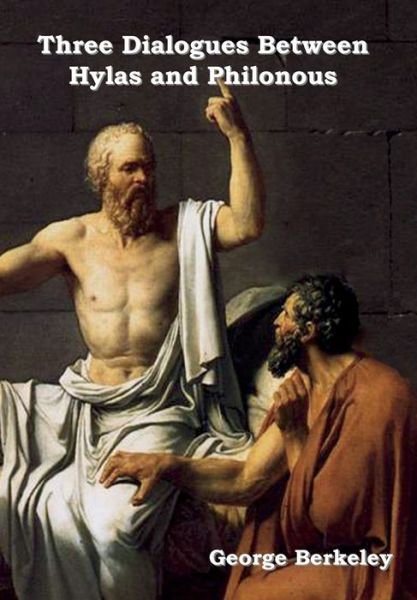

![Cover for George Berkeley · Three Dialogues Between Hylas and Philonous. In Opposition to Sceptics and Atheists. By George Berkley [sic], (Hardcover Book) (2018)](https://imusic.b-cdn.net/images/item/original/639/9781385621639.jpg?george-berkeley-2018-three-dialogues-between-hylas-and-philonous-in-opposition-to-sceptics-and-atheists-by-george-berkley-sic-hardcover-book&class=scaled&v=1667079889)











![Cover for George Berkeley · Three Dialogues between Hylas and Philonous (1713) (Paperback Book) [Annotated edition] (2012)](https://imusic.b-cdn.net/images/item/original/885/9781551119885.jpg?george-berkeley-2012-three-dialogues-between-hylas-and-philonous-1713-paperback-book&class=scaled&v=1401800372)


![Cover for George Berkeley · Three Dialogues Between Hylas and Philonous. in Opposition to Sceptics and Atheists. by George Berkley [sic], ... (Paperback Book) (2010)](https://imusic.b-cdn.net/images/item/original/640/9781171105640.jpg?george-berkeley-2010-three-dialogues-between-hylas-and-philonous-in-opposition-to-sceptics-and-atheists-by-george-berkley-sic-paperback-book&class=scaled&v=1503822809)