この商品を友人に教える:
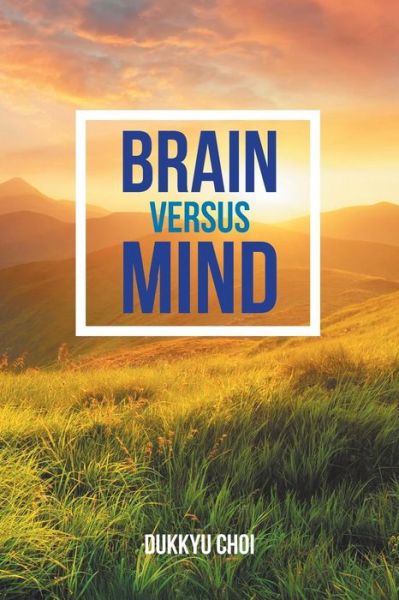
Brain Versus Mind Dukkyu Choi
遠隔倉庫からの取り寄せ


他の形態でも入手可能:
Brain Versus Mind
Dukkyu Choi
The book is divided into three partsThe Mind in Every Day Living, The Mind and the Dream World, and The Mind after Death. Due to the immateriality of mind or consciousness and the unknown mechanism thereof, the terms such as consciousness, mind, thought, emotion, and the like are not clearly defined, even in the twenty-first century, Choi Writes. To discover the mechanism and to define the terms clearly are my concerns in this book. He adds that one of his objectives is to prove continuity of consciousness after death. The first five consciousnesses are our sense consciousnesses, Choi explains, while the sixth consciousness, called the mano-vijnana, is generated by the sixth organ, referred to as the organ of mind or root of mind. What exactly that is, Choi continues, we do not know. However, it is crystal clear that the sixth organ is not the brain. It must be a nonphysical and immaterialistic organ that is capable of reading something. Choi goes on to explain the seventh consciousness, called manas. Unlike the first six consciousnesses, this one does not have an organ. It involves thinking, cogitation, and intellection. The first six consciousnesses perceive and discriminate their corresponding objects and trigger to think so as to give rise to the seventh consciousness, manas, which is accumulated in the eighth consciousness, alaya, as seeds of mind (cittas), Choi continues, adding that all mental activities are stored in alaya.
| メディア | 書籍 Paperback Book (ソフトカバーで背表紙を接着した本) |
| リリース済み | 2017年2月27日 |
| ISBN13 | 9781524678357 |
| 出版社 | AuthorHouse UK |
| ページ数 | 246 |
| 寸法 | 152 × 229 × 14 mm · 367 g |
| 言語 | 英語 |

