この商品を友人に教える:
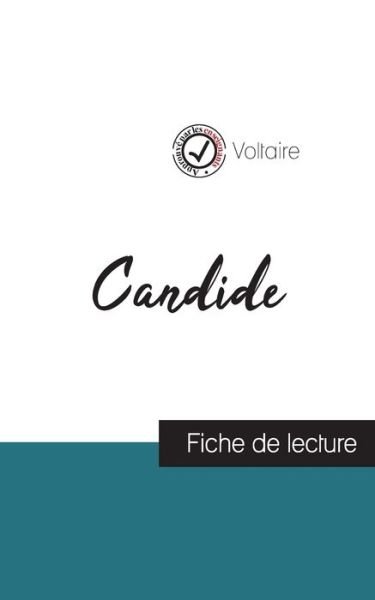
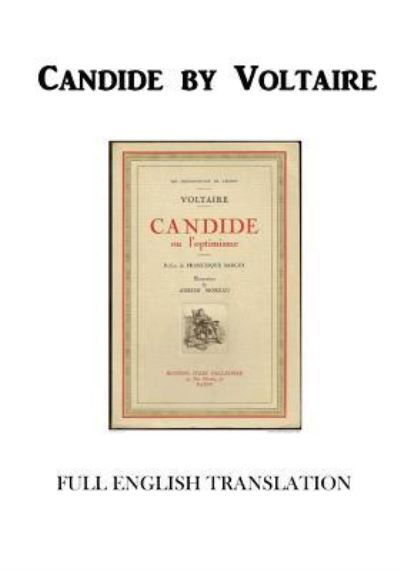
Candide by Voltaire
遠隔倉庫からの取り寄せ
 クリスマスプレゼントは1月31日まで返品可能です



Candide by Voltaire
Voltaire
Candide by Voltaire
By Voltaire
FULL ENGLISH TRANSLATION
Introduction by Philip Littell
William F. Fleming
Candide, ou l'Optimisme is a French satire first published in 1759 by Voltaire, a philosopher of the Age of Enlightenment. The novella has been widely translated, with English versions titled Candide: or, All for the Best (1759); Candide: or, The Optimist (1762); and Candide: or, Optimism (1947). It begins with a young man, Candide, who is living a sheltered life in an Edenic paradise and being indoctrinated with Leibnizian optimism (or simply "optimism") by his mentor, Professor Pangloss. The work describes the abrupt cessation of this lifestyle, followed by Candide's slow, painful disillusionment as he witnesses and experiences great hardships in the world. Voltaire concludes with Candide, if not rejecting optimism outright, advocating a deeply practical precept, "we must cultivate our garden," in lieu of the Leibnizian mantra of Pangloss, "all is for the best" in the "best of all possible worlds."
Ever since 1759, when Voltaire wrote "Candide" in ridicule of the notion that this is the best of all possible worlds, this world has been a gayer place for readers. Voltaire wrote it in three days, and five or six generations have found that its laughter does not grow old.
"Candide" has not aged. Yet how different the book would have looked if Voltaire had written it a hundred and fifty years later than 1759. It would have been, among other things, a book of sights and sounds. A modern writer would have tried to catch and fix in words some of those Atlantic changes which broke the Atlantic monotony of that voyage from Cadiz to Buenos Ayres. When Martin and Candide were sailing the length of the Mediterranean we should have had a contrast between naked scarped Balearic cliffs and headlands of Calabria in their mists. We should have had quarter distances, far horizons, the altering silhouettes of an Ionian island. Colored birds would have filled Paraguay with their silver or acid cries.
Dr. Pangloss, to prove the existence of design in the universe, says that noses were made to carry spectacles, and so we have spectacles. A modern satirist would not try to paint with Voltaire's quick brush the doctrine that he wanted to expose. And he would choose a more complicated doctrine than Dr. Pangloss's optimism, would study it more closely, feel his destructive way about it with a more learned and caressing malice. His attack, stealthier, more flexible and more patient than Voltaire's, would call upon us, especially when his learning got a little out of control, to be more than patient. Now and then he would bore us. "Candide" never bored anybody except William Wordsworth.
Candide contains thirty episodic chapters, which may be grouped into two main schemes: one consists of two divisions, separated by the protagonist's hiatus in El Dorado; the other consists of three parts, each defined by its geographical setting. By the former scheme, the first half of Candide constitutes the rising action and the last part the resolution. This view is supported by the strong theme of travel and quest, reminiscent of adventure and picaresque novels, which tend to employ such a dramatic structure. By the latter scheme, the thirty chapters may be grouped into three parts each comprising ten chapters and defined by locale: I-X are set in Europe, XI-XX are set in the Americas, and XXI-XXX are set in Europe and the Ottoman Empire. The plot summary that follows uses this second format and includes Voltaire's additions of 1761.
| メディア | 書籍 Paperback Book (ソフトカバーで背表紙を接着した本) |
| リリース済み | 2015年12月29日 |
| ISBN13 | 9781522968566 |
| 出版社 | Createspace Independent Publishing Platf |
| ページ数 | 98 |
| 寸法 | 178 × 254 × 5 mm · 185 g |
| 言語 | 英語 |

![Cover for Voltaire · Candide: A Norton Critical Edition - Norton Critical Editions (Paperback Book) [Fourth edition] (2026)](https://imusic.b-cdn.net/images/item/original/592/9781324059592.jpg?voltaire-2026-candide-a-norton-critical-edition-norton-critical-editions-paperback-book&class=scaled&v=1774886362)