この商品を友人に教える:
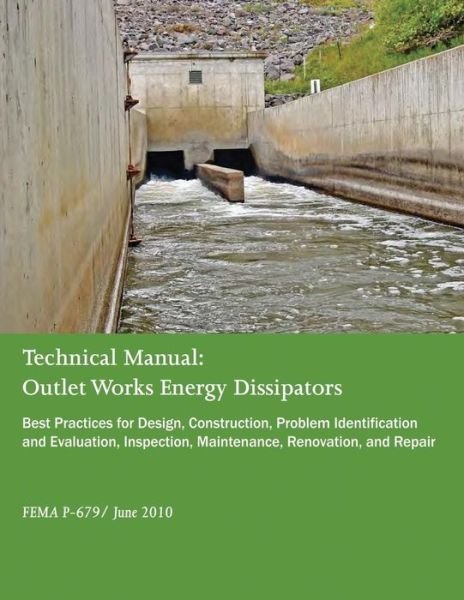
Technical Manual: Outlet Works Energy Dissipators: Best Practices for Design, Construction, Problem Identification and Evaluation, Inspe Federal Emergency Management Agency
遠隔倉庫からの取り寄せ
 クリスマスプレゼントは1月31日まで返品可能です



Technical Manual: Outlet Works Energy Dissipators: Best Practices for Design, Construction, Problem Identification and Evaluation, Inspe
Federal Emergency Management Agency
Publisher Marketing: Water emerging from an outlet works conduit typically requires dissipation of excess kinetic energy to prevent downstream channel erosion. This flow often discharges at a high velocity and must be directed away from the toe of the dam. An energy dissipator is used to retard the fast moving water by creating turbulence and developing a loss through change in the water's momentum. This prevents damage to the channel downstream from the structure. The design of an energy dissipating structure can vary from simple to complex. The selection of the proper structure must consider: The energy content and unit discharge of the flow entering the dissipator; The type of valve or gate used to regulate discharge; The number of conduits involved; The duration and frequency of flow; The compatibility with the conduit or tunnel from which flow is emerging; The amount of energy that must be dissipated to control downstream channel erosion; Tailwater conditions; Alignment and location with respect to the toe of the dam and other features; Economic concerns. The goal of this manual is to provide a nationally recognized source to promote greater consistency between similar project designs, facilitate more effective and consistent review of proposed designs, and aid in the design of safer, more reliable facilities. An outlet works is a combination of structures and equipment required for the safe operation and control of water released from a reservoir to serve various purposes (i.e., regulating stream flow and quality; releasing floodwater, providing irrigation, municipal, and/or industrial water). The outlet works typically consists of an intake structure, conduit, control house, gate chamber, regulating valve(s) or gates(s), and an energy dissipation structure. This manual will focus on the methods by which energy resulting from the release of water through the outlet works is dissipated for safe discharge downstream. The theory involved with energy dissipation can best be explained with the hydraulic jump. Flowing water emerging from an outlet works can be in one of two states: subcritical or supercritical.
| メディア | 書籍 Paperback Book (ソフトカバーで背表紙を接着した本) |
| リリース済み | 2015年3月6日 |
| ISBN13 | 9781508751687 |
| 出版社 | Createspace |
| ページ数 | 558 |
| 寸法 | 216 × 279 × 29 mm · 1,27 kg |