この商品を友人に教える:
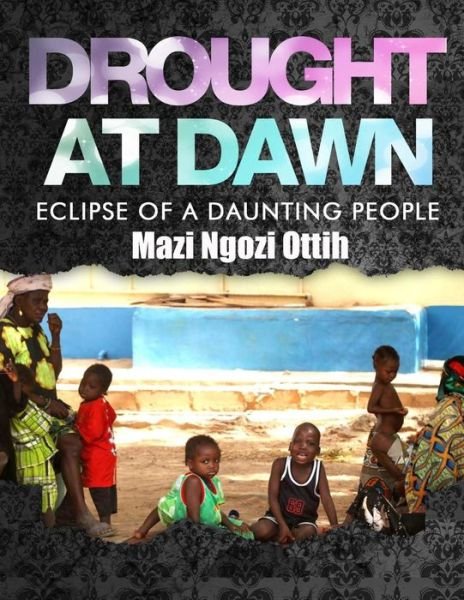
Drought at Dawn Mazi Ngozi Ottih
遠隔倉庫からの取り寄せ


Drought at Dawn
Mazi Ngozi Ottih
Drought at the Niger and Benue rivers may have adversely affected the population of Southeastern Nigeria, but their eclipse cannot be attributed to it. The unruly activities of political thugs in the former Western region of Nigeria otherwise called the Wild West, led a few military men, mostly of the ranks of major in the Nigerian army, and mainly of the former Eastern region of Nigeria or Igbo origin, to embark on indiscriminate killing of seasoned politicians, mostly of other regions in the country, and that led to their decline as a people. With the indignation of many and antagonism of all others, a decision was made to undermine their status and that began a struggle, and a conflict and eventually war. As the conflict intensified, the Hausa/Fulani and Yoruba ethnic populations (Northern and Western regions of the country) capitalized on the vulnerable state of the Igbo's (Eastern region) and eliminated all advantages accrued to the group. The victorious group instituted policies and promulgated decrees that confiscated majority shares of foreign firms in the country, and that included firms owned by seceding Eastern Nigerians or Biafran nationals. Another policy converted Nigeria pounds to Naira and decimated the financial strength of the seceding Eastern region, thereby undermining prospects for a peaceful resolution of the conflict or chances of regaining substantial economic growth in the reabsorbed region after the drought of war. With the demise of the Biafran republic, efforts were made to reintegrate the former Eastern Nigeria with the rest of the country, but the destructive effects of the indigenization policy and twenty Naira deprivation sin induced the migration of numerous Eastern Nigerians to other parts of the world, and that undercut the cerebral base of the region and ruined prospects for a quick recovery at the end of war. Initially, they migrated to countries that gave sanctuary to Biafran nationals, such as Gabon, Ivory Coast, Tanzania, Zambia, Haiti, Benin, Togo, Cameroon, Equatorial Guinea, Ghana, Senegal, Gambia, etc., but have since wandered to faraway cities, such as London, Washington DC, Paris, New York, Lisbon, Los Angeles, Rome, Tokyo, Chicago, New Delhi, Houston, Amsterdam, Atlanta, Bonn, Dallas, Johannesburg, San Francisco, Berlin, Miami, Stockholm, Helsinki, Boston, Brasilia, Detroit, Seattle, Brussels, Philadelphia, etc., and visits their ancestral homes occasionally. They have also formed associations that promote mutual interests, and with that, the harmony that harnessed tremendous advantage in the first republic and ensured entrepreneurial expedience may have been restored. And although Nigeria deprivation sin delayed recovery in the reabsorbed region, it failed to dampen the entrepreneurial zeal of the population, though with the awareness of the futility of her policies, she altered strategy and recruited Igbo technocrats to serve in government. But by then the damage had been done; the society had been infested with predatory tendency, insecurity, moral decadence, and myriad corruption. However, with the inclusion of Igbo entrepreneurial expedience and intrinsic dynamism, a valuable sector of the economy was restored. But even with that, the absence of standardized structure in the public sector diluted efforts to improve the economy and enabled a selective few to amass enormous wealth, assume impenetrable powers, and the society succumbed to their wimps and propagated their values, and that provoked the conflicts that still enrages in several parts of the country. The economy was ruined under the leadership of military hierarchy and remain sour in the midst of their influence over the affairs of the country. With corrupted leaders at the helm of affairs, the deprivation of economic power that usually occurs with defeat at war was allowed to continue for a prolonged period, and that undermined prospects for a quick recovery after the droughts of war.
| メディア | 書籍 Paperback Book (ソフトカバーで背表紙を接着した本) |
| リリース済み | 2014年5月2日 |
| ISBN13 | 9781499343502 |
| 出版社 | Createspace Independent Publishing Platf |
| ページ数 | 58 |
| 寸法 | 216 × 280 × 3 mm · 158 g |
| 言語 | 英語 |