この商品を友人に教える:
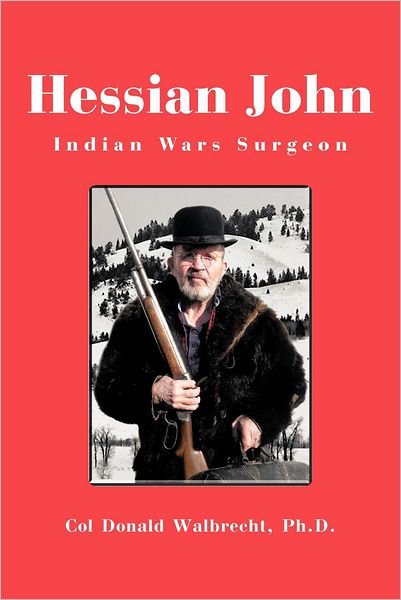
Hessian John: Indian Wars Surgeon Col Donald Walbrecht Ph D
遠隔倉庫からの取り寄せ


他の形態でも入手可能:
Hessian John: Indian Wars Surgeon
Col Donald Walbrecht Ph D
Publisher Marketing: The US Army's fighting experience from the Civil War's end in 1865 until the Western Frontier's end in 1890 has come to be known as the Indian Wars period. Previous conflicts had been limited to skirmishes with native tribes as their people were pushed westward into yet unwanted territory. Following the 1849 gold rush, travel routes and settlement pockets had increased across the trans-Mississippi regions as ever-greater numbers of Euro-Americans quested for land (and gold), enlarging the conflict between incompatible ways of life. As settlers and adventurers besieged tribesmen, some chose guerrilla warfare, characterized by skirmishes, raids, massacres, battles, and campaigns of varying intensities that ranged over plains, mountains, and deserts of the vast American West. Because the army's responsibilities involved great distances, limited resources, and extended operations (often impeded by governmental policies), its punitive actions suffered. From revolutionary times, the new United States held anti-standing-army sentiments believing that the "Indian problem" can be settled by nonmilitary means. Hence, the post-Civil War army dropped in half by the critical centennial year when the nation was shocked by the Little Big Horn catastrophe. In the previous ten years, a series of forts had been built and a command structure was organized for frontier defense around two western commands: the Division of the Missouri (containing Departments of Arkansas, Missouri, and the Platte) and the Division of the Pacific (containing Departments of California, Columbia, and the Gulf). Since the theater of war was largely uninhabited, its variations in climate and geographical features and its extreme distances were accentuated by army manpower limitations, logistical problems, and movement difficulties. In the postwar decades, few officers and soldiers had frontier and Indian-fighting experience against an unorthodox enemy. Those who had previous contacts approached their opponents with respect and were often helpful in promoting solutions to the Indian problem. Most memorable among the army's nineteenth century leaders are the names of Sherman, Sheridan, Miles, Howard, Gibbon, Sully, Cooke, Canby, and Crook. Given the central role their soldiers made in dealing with the Indians, the US Army and a few of its notable leaders made major contributions to the consolidation of the American continent.
| メディア | 書籍 Paperback Book (ソフトカバーで背表紙を接着した本) |
| リリース済み | 2012年9月24日 |
| ISBN13 | 9781466959576 |
| 出版社 | Trafford Publishing |
| ジャンル | Cultural Region > Western U.s. |
| ページ数 | 252 |
| 寸法 | 152 × 229 × 15 mm · 371 g |
| 言語 | 英語 |