この商品を友人に教える:
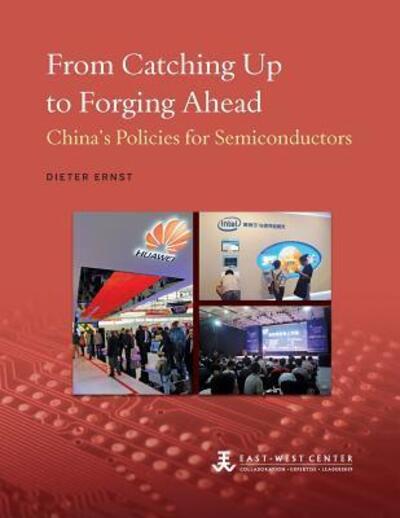
From Catching Up to Forging Ahead Dieter Ernst
遠隔倉庫からの取り寄せ


From Catching Up to Forging Ahead
Dieter Ernst
China, the world's leading exporter of electronic products, faces a fundamental dilemma. It is the largest and fastest-growing market for semiconductors, the core component of those electronics products. Yet, at least 80 percent of the semiconductors used in China's electronics products must be imported. As a result, China's trade deficit in semiconductors has more than doubled since 2005 and now exceeds the huge amount it spends on crude oil imports.
To correct this unsustainable imbalance, China's new strategy to upgrade its semiconductor industry seeks to move from catching up to forging ahead in semiconductors. The strategy calls for simultaneously strengthening advanced manufacturing and innovation capabilities in China's integrated circuit (IC) design industry and its domestic IC fabrication, primarily through foundry services. Drawing on policy documents and interviews with China-based industry experts, this study takes a close look at the objectives, strategy, and implementation policies of China's new push in semiconductors and examines what this implies for China's prospects in this industry.
The study shows that China's new policy resorts to private equity investment rather than subsidy as the tool of industrial policy. The government participates in equity investment and claims it will do so without intervening in management decisions. This policy is expected to reduce the cost of investment funds for a selected group of firms, which is to form a "national team" in the semiconductor industry. China's new policy to upgrade its semiconductor industry through innovation does not represent a radical break with its deeply embedded statist tradition. Within these boundaries, however, the study detects important changes in the direction of a bottom-up, market-led approach to industrial policy.
In response to the rising complexity and uncertainty of today's semiconductor industry, the government seems more open to experimentation with new approaches to investment finance and flexible, bottom-up policy implementation, based on multilayered industrial dialogues with private firms. China's policies to forge ahead in semiconductors, thus, provide an interesting example of its current efforts to move from investment-driven catching up to an innovation-driven development model.
| メディア | 書籍 Paperback Book (ソフトカバーで背表紙を接着した本) |
| リリース済み | 2015年9月24日 |
| ISBN13 | 9780866382663 |
| 出版社 | East-West Center |
| ページ数 | 88 |
| 寸法 | 216 × 280 × 5 mm · 226 g |
| 言語 | 英語 |