
この商品を友人に教える:
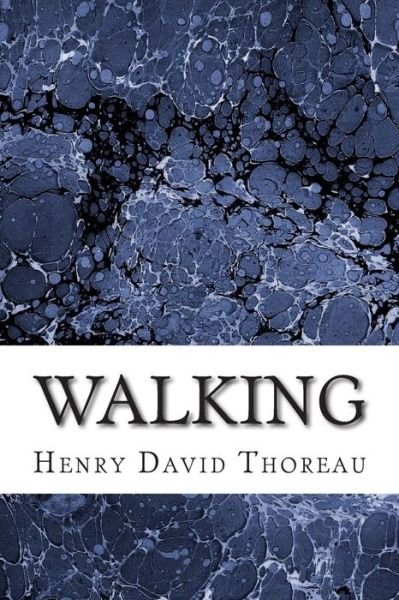
Walking Henry David Thoreau


他の形態でも入手可能:
- Paperback Book (2019) ¥ 1.434
- Paperback Book (1901) ¥ 2.171
- Paperback Book (2016) ¥ 2.211
- Paperback Book (2018) ¥ 2.231
- Paperback Book (2017) ¥ 2.251
- Paperback Book (2017) ¥ 2.251
- Paperback Book (2016) ¥ 2.251
- Paperback Book (2017) ¥ 2.291
-
Paperback BookReprint edition(2006) ¥ 2.311
-
Paperback Book1st edition(1994) ¥ 2.331
- Paperback Book (2018) ¥ 2.331
- Paperback Book (2017) ¥ 2.331
- Paperback Book (2017) ¥ 2.390
- Paperback Book (2015) ¥ 2.390
- Paperback Book (2016) ¥ 2.390
- Paperback Book (2015) ¥ 2.430
- Paperback Book (2020) ¥ 2.450
- Paperback Book (2020) ¥ 2.450
- Paperback Book (2010) ¥ 2.490
- Paperback Book (2010) ¥ 2.530
- Paperback Book (2016) ¥ 2.530
- Paperback Book (2011) ¥ 2.530
- Paperback Book (2017) ¥ 2.530
- Paperback Book (2014) ¥ 2.809
- Book (2023) ¥ 2.908
Walking
Henry David Thoreau
Henry David Thoreau ( July 12, 1817 - May 6, 1862) was an American author, poet, philosopher, abolitionist, naturalist, tax resister, development critic, surveyor, and historian. A leading transcendentalist, Thoreau is best known for his book Walden, a reflection upon simple living in natural surroundings, and his essay Resistance to Civil Government (also known as Civil Disobedience), an argument for disobedience to an unjust state. Thoreau's books, articles, essays, journals, and poetry total over 20 volumes. Among his lasting contributions are his writings on natural history and philosophy, where he anticipated the methods and findings of ecology and environmental history, two sources of modern-day environmentalism. His literary style interweaves close natural observation, personal experience, pointed rhetoric, symbolic meanings, and historical lore, while displaying a poetic sensibility, philosophical austerity, and "Yankee" love of practical detail. He was also deeply interested in the idea of survival in the face of hostile elements, historical change, and natural decay; at the same time he advocated abandoning waste and illusion in order to discover life's true essential needs. He was a lifelong abolitionist, delivering lectures that attacked the Fugitive Slave Law while praising the writings of Wendell Phillips and defending abolitionist John Brown. Thoreau's philosophy of civil disobedience later influenced the political thoughts and actions of such notable figures as Leo Tolstoy, Mahatma Gandhi, and Martin Luther King, Jr. Thoreau is sometimes cited as an anarchist. Though Civil Disobedience seems to call for improving rather than abolishing government - "I ask for, not at once no government, but at once a better government" - the direction of this improvement points toward anarchism: "'That government is best which governs not at all;' and when men are prepared for it, that will be the kind of government which they will have." Richard T. Drinnon partly blames Thoreau for the ambiguity, noting that Thoreau's "sly satire, his liking for wide margins for his writing, and his fondness for paradox provided ammunition for widely divergent interpretations of 'Civil Disobedience'."
| メディア | 書籍 Paperback Book (ソフトカバーで背表紙を接着した本) |
| リリース済み | 2015年11月10日 |
| ISBN13 | 9781519237392 |
| 出版社 | Createspace Independent Publishing Platf |
| ページ数 | 56 |
| 寸法 | 129 × 198 × 3 mm · 63 g |
| 言語 | 英語 |
Henry David Thoreauの他の作品を見る
すべて表示


![Cover for Henry David Thoreau · Walden (Paperback Book) [Illustrated edition] (2024)](https://imusic.b-cdn.net/images/item/original/578/9798880924578.jpg?henry-david-thoreau-2024-walden-paperback-book&class=scaled&v=1718015402)















このシリーズの他の商品


Henry David Thoreauのすべてを見る ( 例: Paperback Book , Hardcover Book , Book , CD および MP3-CD )